Pocketfolio Team
July 1, 2026

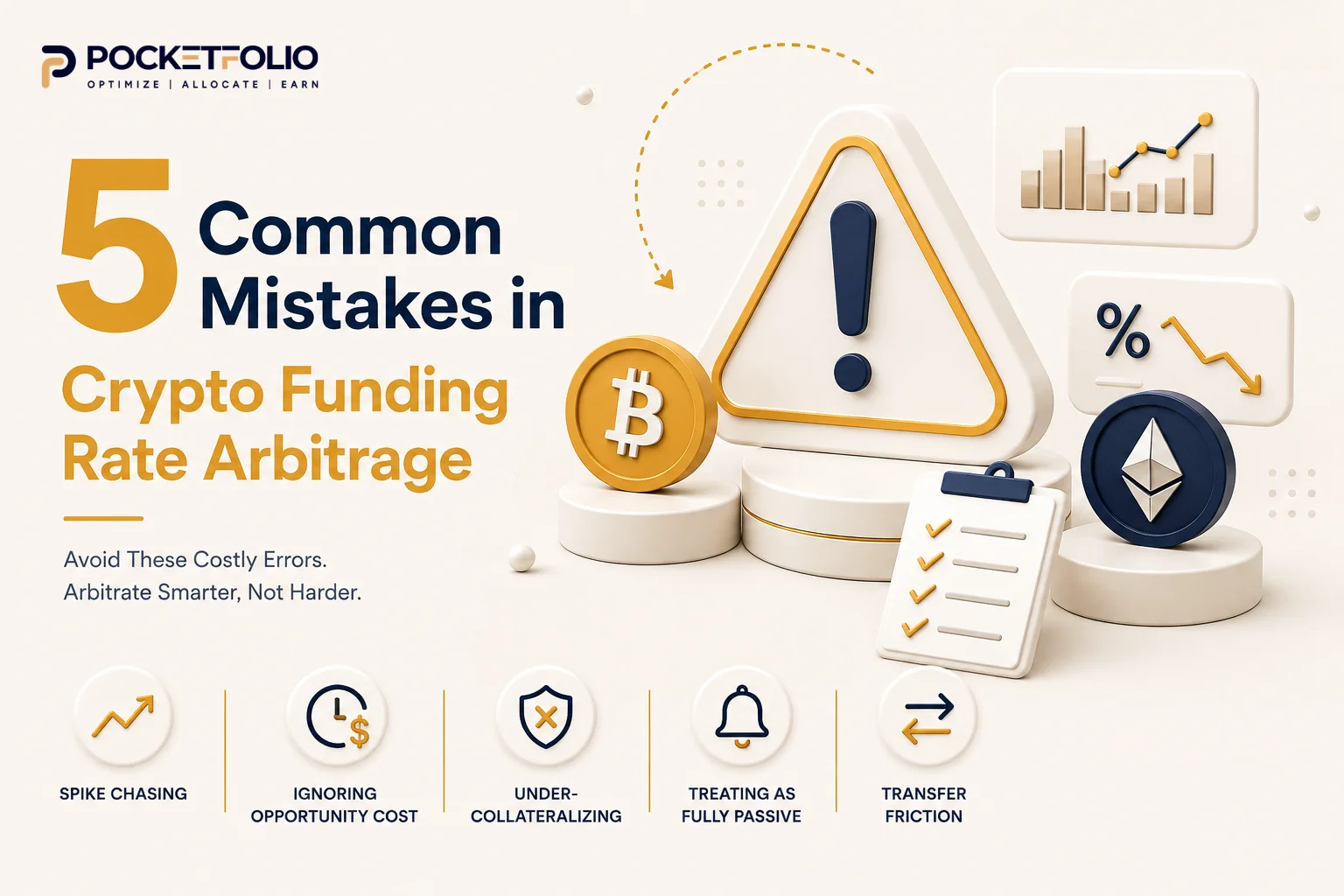
Funding rate arbitrage gets pitched as one of the safer strategies in crypto: market-neutral, mechanical, low-drama. That reputation is mostly earned, but it hides a real trap. The strategy is simple enough that traders skip the risk management they’d apply to a directional trade — and that’s exactly where most losses come from.
This guide breaks down five mistakes that show up again and again in crypto funding rate arbitrage, why each one happens, and what experienced traders do differently.
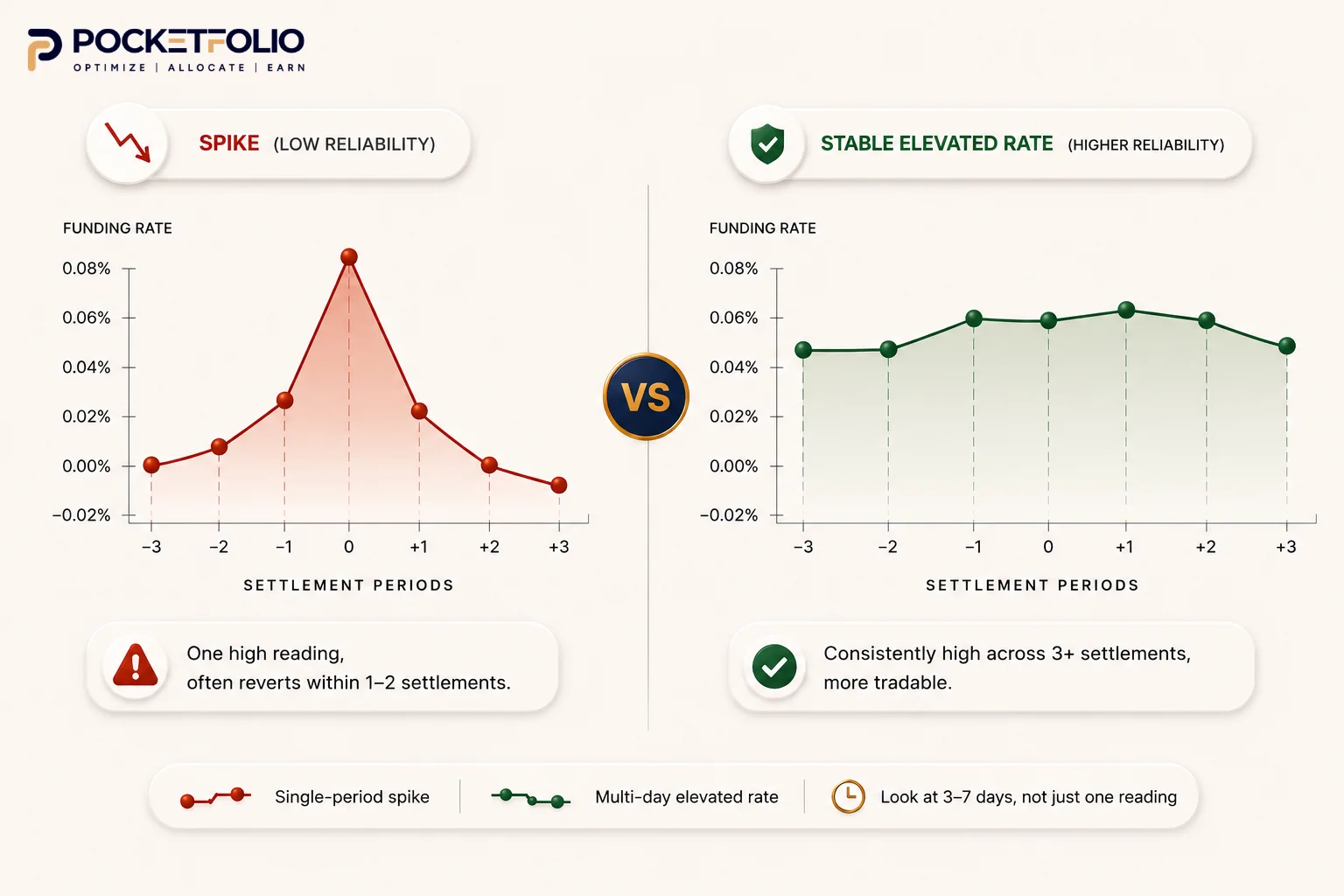
A funding rate that jumps to 0.08% for one settlement period looks exciting. It’s also often the least reliable signal to trade on.
Single-period spikes are usually driven by a short burst of leveraged long demand — a hype cycle, a listing announcement, a liquidation cascade — and they tend to revert within one or two settlements. A trader who enters right after seeing a spike is frequently entering right before the rate normalizes, at which point the perpetual futures funding rate barely covers fees.
Look at the funding rate’s behavior over the past 3–7 days, not just the current reading. A rate that’s been elevated and stable across multiple settlement periods is a far more tradable signal than a single high print.
| Signal type | What it looks like | Reliability |
|---|---|---|
| Single-period spike | One high reading, no prior trend | Low — often reverts fast |
| Multi-day elevated rate | Consistently high across 3+ settlements | Higher — more tradable |
| Gradual uptrend | Steadily rising over a week | Moderate — worth monitoring before entry |
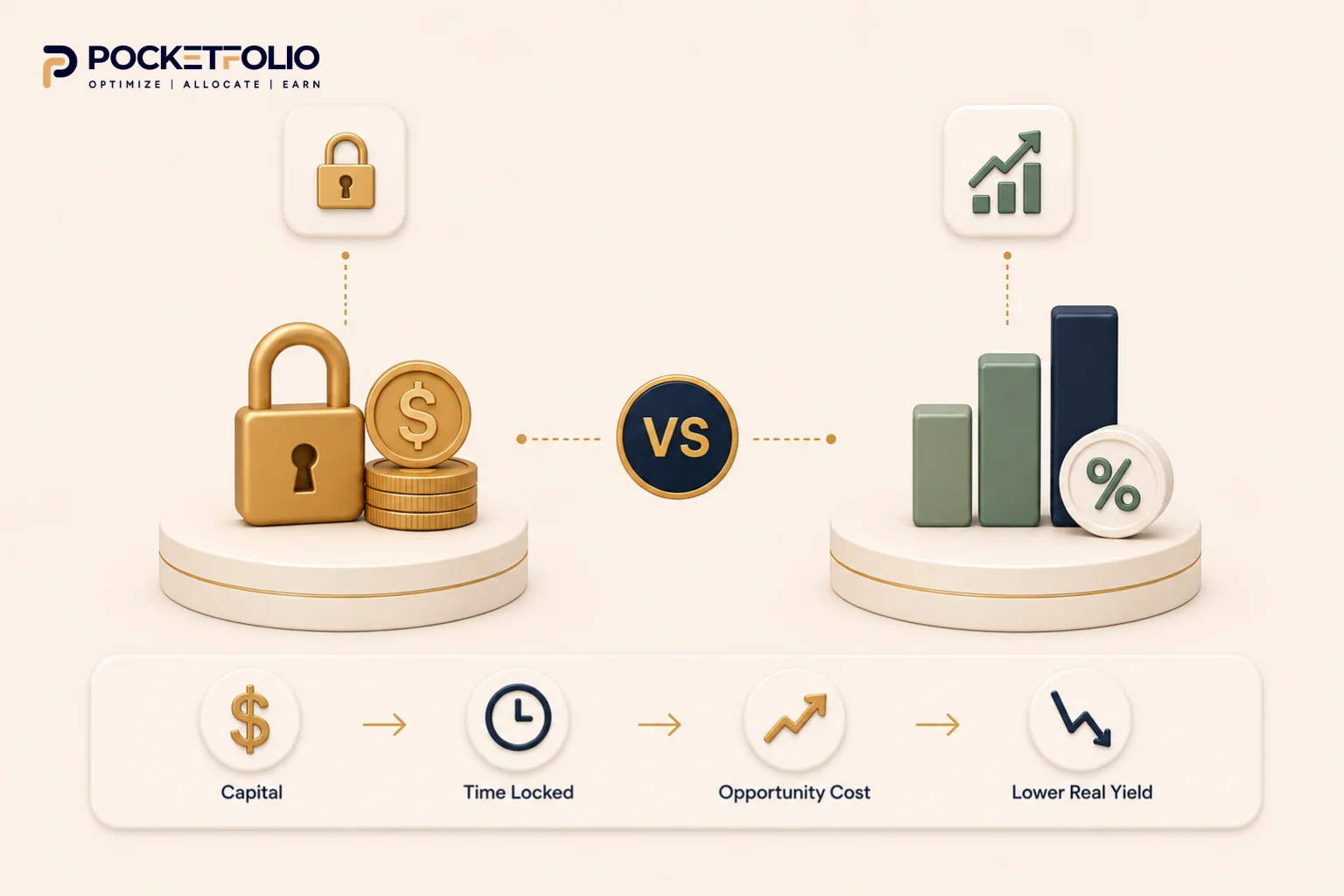
The funding payment itself isn’t the only cost in this trade. Capital tied up in a spot-perpetual hedge isn’t available for anything else — including better opportunities that might show up while you’re locked in.
Traders sometimes calculate expected annualized yield without accounting for what that capital could otherwise be earning, or without factoring in that closing and reopening a position (to chase a better funding rate spread elsewhere) carries its own trading fees and slippage.
Treat the funding rate as a yield you’re comparing against realistic alternatives, not against zero. If a stable, lower-risk yield elsewhere is close to what your arbitrage trade is paying after fees, the arbitrage trade may not be worth the added operational complexity.
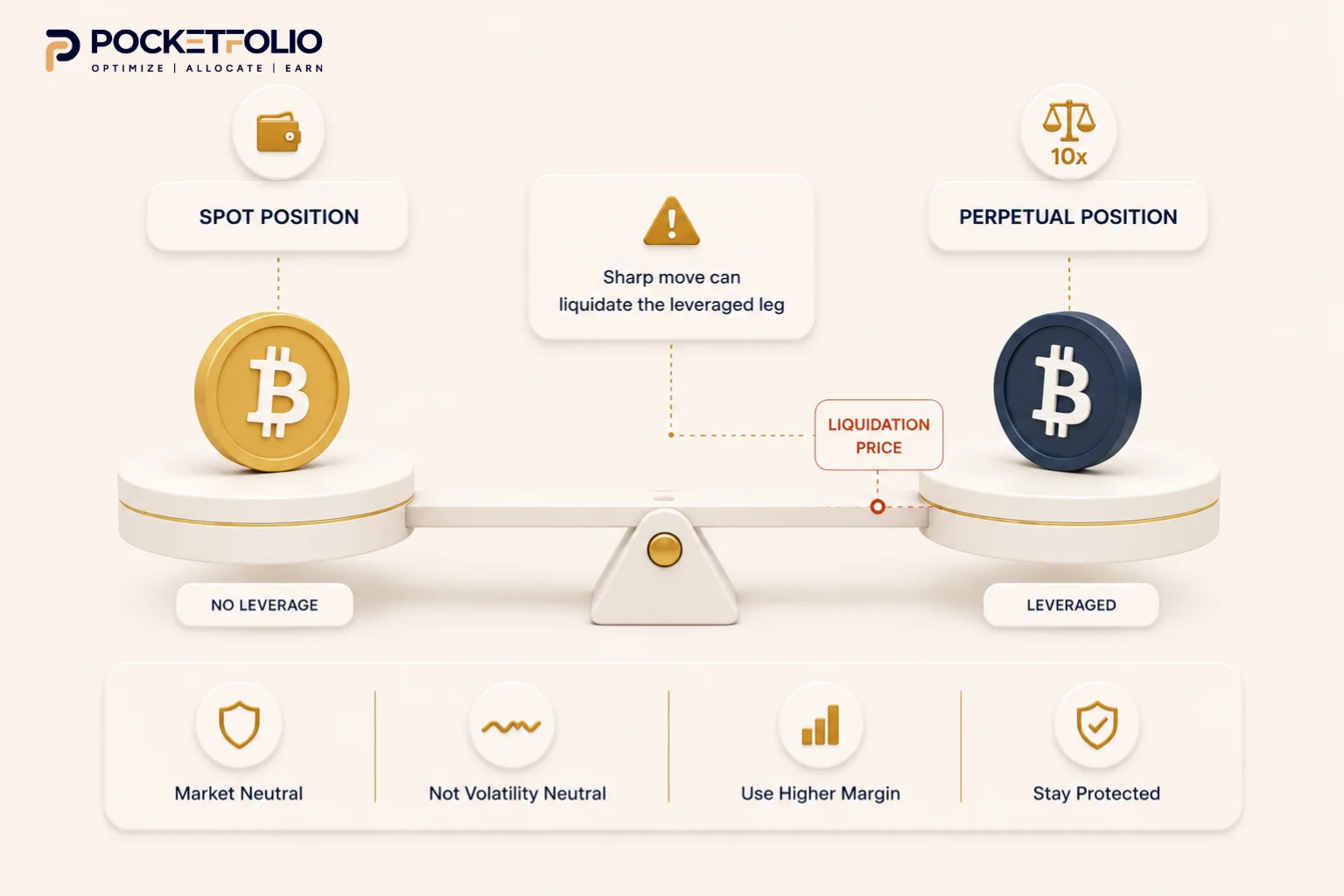
The perpetual futures leg of the trade typically uses leverage, while the spot leg doesn’t. This asymmetry means a sharp, short-term price move can put the leveraged leg at risk of liquidation even though the overall position is designed to be market-neutral.
This is one of the more counterintuitive risks in crypto funding rate arbitrage: the position is neutral to price direction, but not neutral to price volatility. A fast spike can liquidate the perpetual leg before the offsetting spot position has any chance to compensate, because liquidation happens on that leg’s margin in isolation.
Keep meaningfully more margin on the perpetual leg than the exchange’s minimum requirement, and understand your liquidation price relative to realistic short-term volatility for that asset — not just its average daily range.
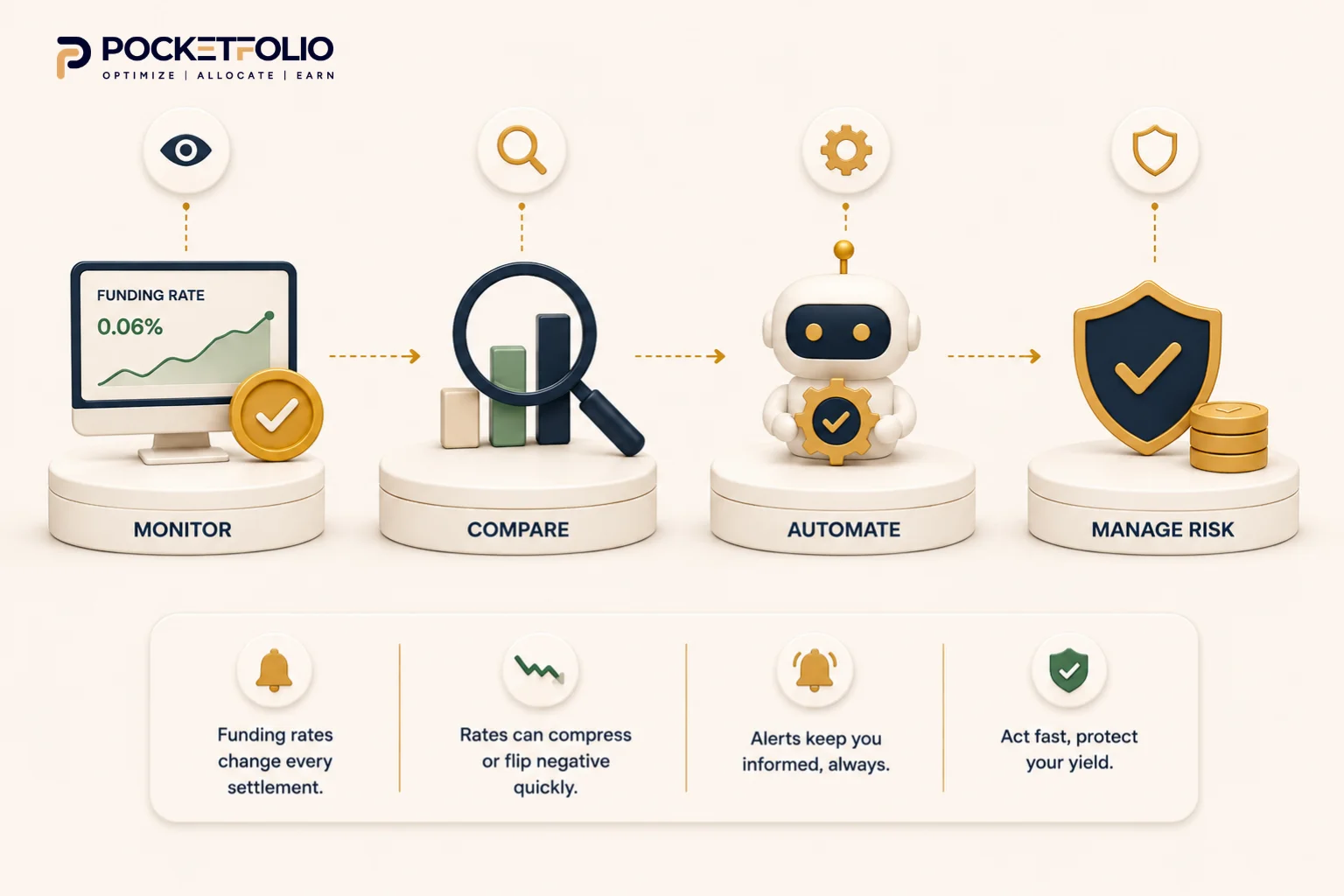
Because the trade doesn’t require a directional view, it’s tempting to open it and forget about it. Funding rates aren’t static, though. They can compress, flatten, or flip negative at any settlement, sometimes within a single day during volatile conditions.
A trader who isn’t monitoring the position can end up holding a trade that flipped from collecting funding to paying it, sometimes for several settlement periods before they notice.
Set a clear exit rule before entering — for example, closing the position if the funding rate drops below a specific threshold for two consecutive settlements. Automated tracking or alerts remove the need to check manually every few hours.
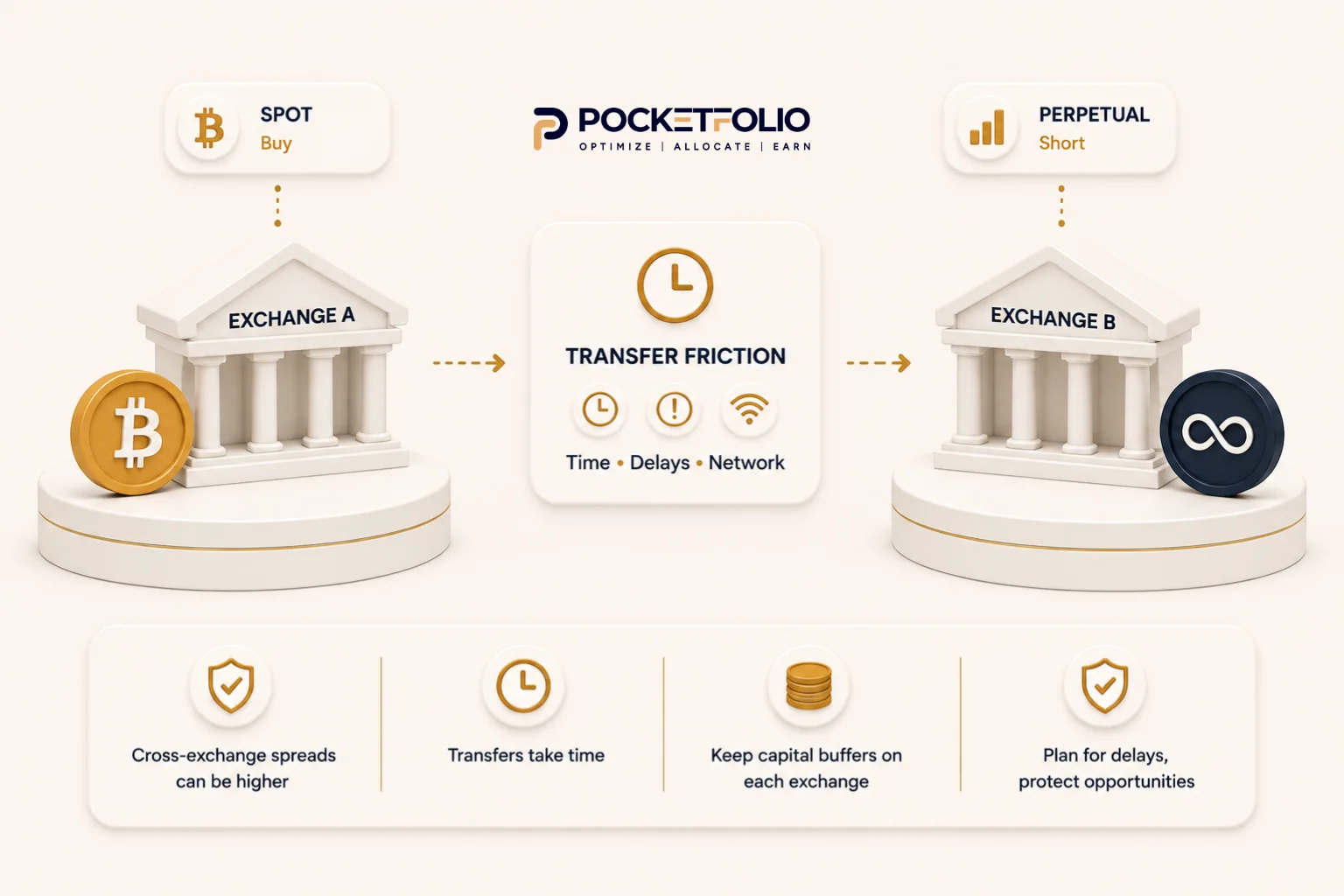
Cross-exchange arbitrage, where the spot and perpetual legs sit on different platforms, can capture a larger funding rate spread than a single-exchange setup. It also introduces a risk that’s easy to underestimate: the time and friction involved in moving capital between platforms.
If a favorable spread starts to close and a trader needs to rebalance or exit quickly, withdrawal processing times, network congestion, or exchange-side delays can mean the opportunity is gone before the capital arrives where it’s needed. This is a risk that spot-futures arbitrage confined to a single exchange doesn’t carry.
Keep a capital buffer on each exchange rather than relying on being able to move funds instantly between them, and factor typical withdrawal times into how tightly you plan to manage the position.
Every mistake on this list comes from the same root cause: treating “market-neutral” as a synonym for “risk-free.” The strategy removes directional price risk, but it doesn’t remove execution risk, liquidity risk, or the need for active management. Traders who do well with funding rate arbitrage tend to be the ones who respect that distinction from the start.
If you’re tracking funding rates across exchanges to avoid some of these mistakes, Pocketfolio’s DIY Trading Scanner surfaces real-time rates and cross-exchange spreads so you can evaluate stability before committing capital, rather than reacting to a single spike. For traders who’d rather not monitor positions manually, Smart Yield Pool handles entry and exit rules automatically. You can also read our full guide on what crypto funding rate arbitrage is if you’re still building foundational understanding of the mechanics.
It’s neutral to price direction, meaning gains or losses from the asset’s price movement cancel out between the two legs. It is not neutral to volatility, liquidation risk, or execution risk, which is where most trader losses actually come from.
Entering based on a single high funding rate reading rather than checking whether that rate has been stable over several settlement periods. Spikes often revert quickly.
There’s no universal number, but keeping meaningfully more than the exchange’s minimum requirement gives you a buffer against short-term volatility that could otherwise trigger liquidation on that leg alone.
Funding rates can shift at every settlement period, so positions benefit from either frequent manual checks or automated alerts, rather than being opened and left unmonitored for days.
Yes. Liquidation on the leveraged leg, execution slippage, trading fees, and withdrawal delays in cross-exchange setups can all erode or exceed the funding income collected, even while the rate itself remains positive.
It can capture a larger funding rate spread than single-exchange arbitrage, but it introduces transfer friction and cross-platform counterparty risk. It tends to suit traders who can maintain capital buffers on multiple exchanges rather than relying on fast transfers.
Yes. Deciding in advance at what funding rate threshold you’ll close the position removes the temptation to hold through a reversal in the hope it recovers.
Leverage on the perpetual leg increases capital efficiency but also increases liquidation risk during sharp price moves. Lower leverage reduces that risk but requires more capital to achieve the same position size.
No. Experienced traders can also fall into passive monitoring or under-collateralization, particularly after a long stretch of stable market conditions makes the risks feel less immediate.
Use real-time monitoring tools rather than manual checks, maintain margin buffers above exchange minimums, and evaluate funding rate stability over days rather than reacting to a single reading.
Search the term and you get a wall of dashboards,
AI arbitrage most often means something else entirely. Usually it
Watch funding rates during any real rally and you will

Search the term and you get a wall of dashboards, all promising the same thing. Yet almost none of them
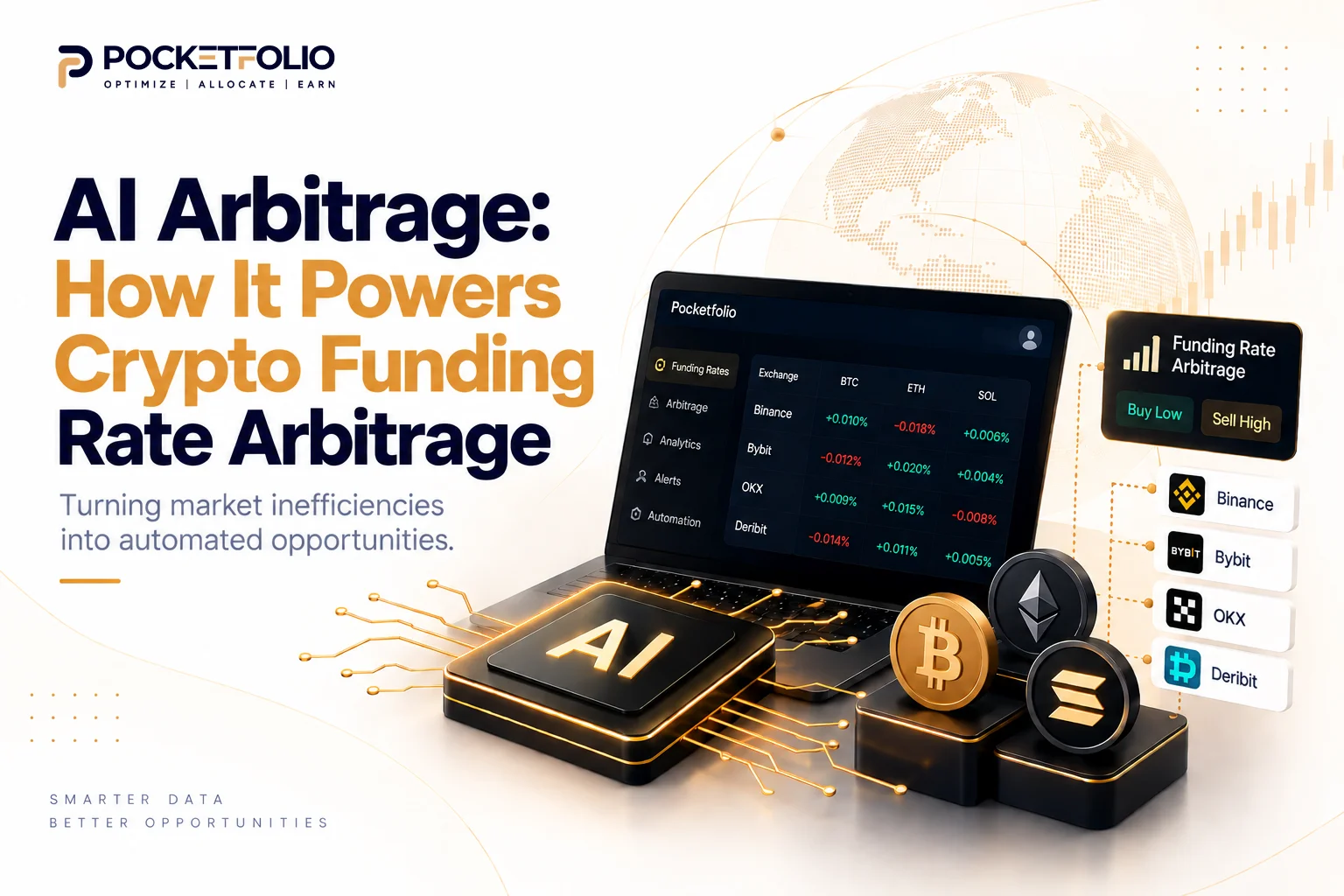
AI arbitrage most often means something else entirely. Usually it means using AI tools to resell services at a markup,
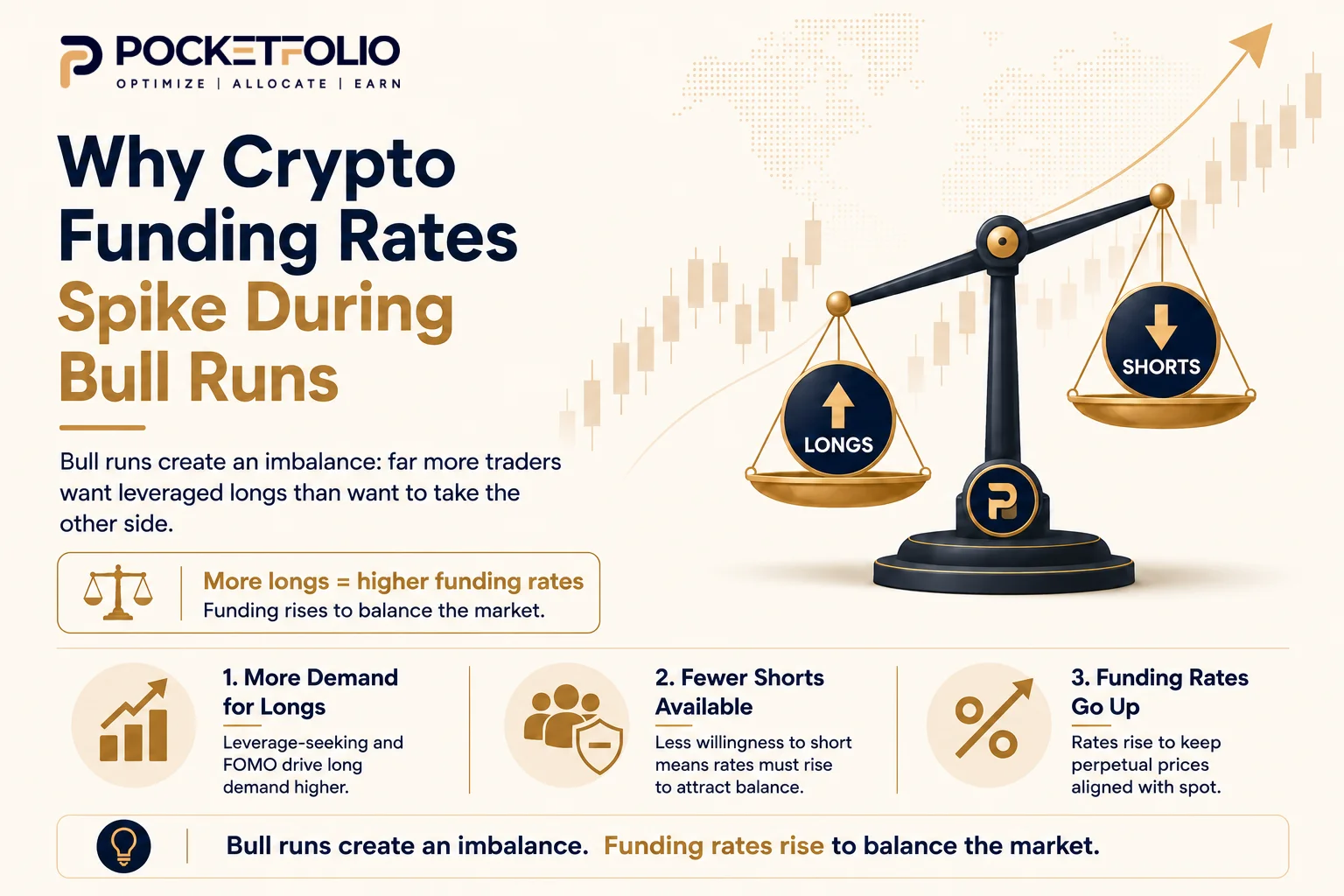
Watch funding rates during any real rally and you will notice a pattern. Why crypto funding rates spike during bull


New breakdowns on funding rates, arbitrage and market structure will arrive at your inbox.