Pocketfolio Team
July 1, 2026


Funding rate arbitrage has gone from a niche tactic used by a handful of crypto-native quant desks to a strategy retail platforms now build entire products around. That shift says something about where the space is heading. This guide covers the future of crypto funding rate arbitrage — what’s changing, and what it likely means for traders over the next few years.
Funding rate arbitrage works because of a persistent imbalance: more traders wanting leveraged long exposure than short exposure, which pushes perpetual prices above spot and keeps funding positive. As more capital chases this exact imbalance, the imbalance itself gets smaller.
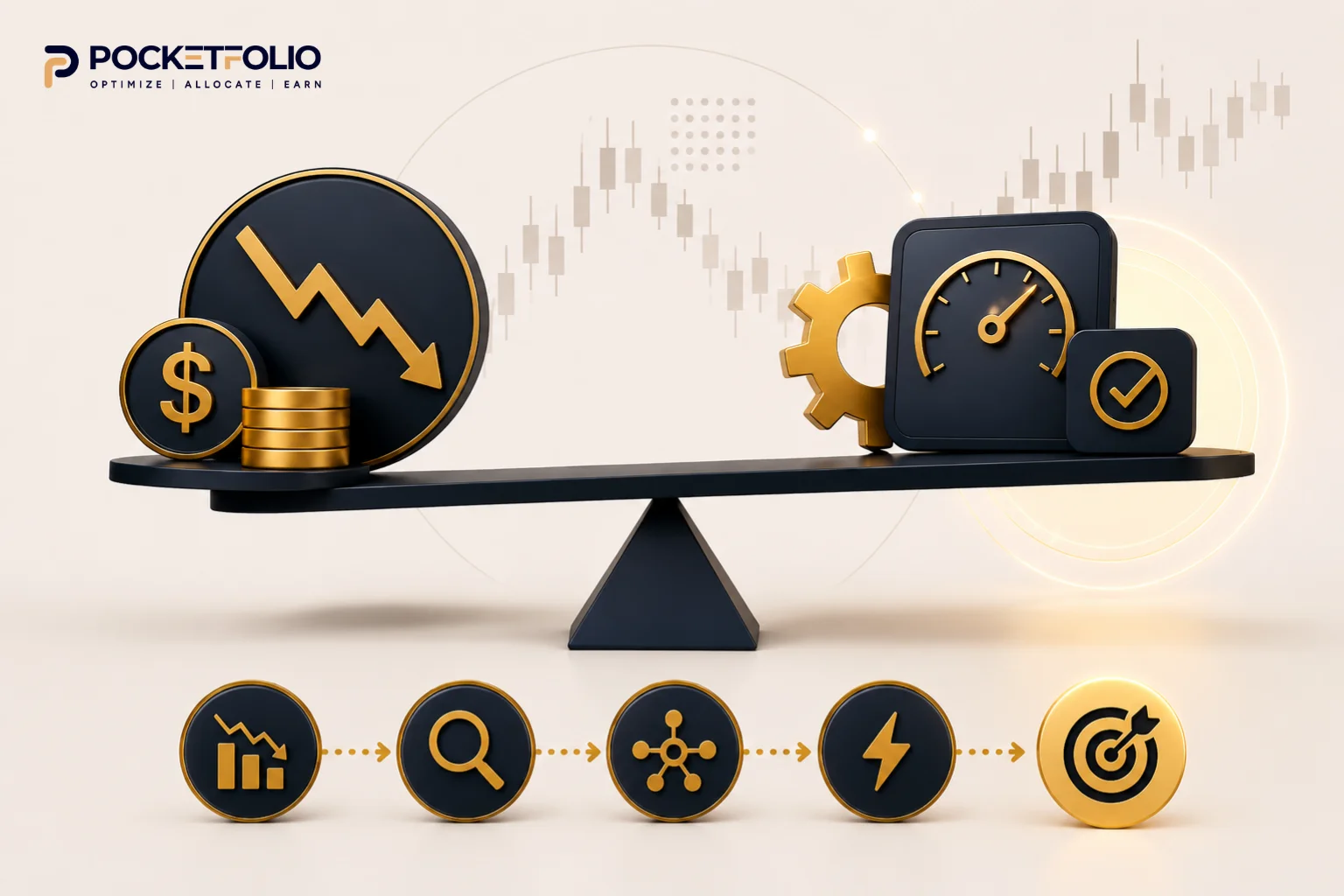
This is a normal arbitrage lifecycle. Spreads that once supported comfortable annualized yields with simple execution increasingly require faster, more automated execution to remain worthwhile. Traders who could once profitably run the strategy with manual monitoring are finding thinner margins that reward speed and automation over patience.
The strategy probably doesn’t disappear, but the “easy yield” version of it — enter, hold, collect — becomes less reliable over time. Execution quality increasingly is the edge, not just recognizing that the perpetual futures funding rate is positive.

Funding rate arbitrage has historically meant comparing rates across centralized exchanges. As perpetual futures markets grow on decentralized venues and across more chains, the comparison set is widening.
A trader is no longer limited to comparing cross-exchange arbitrage opportunities between two centralized platforms; they’re increasingly able to compare centralized exchange rates against on-chain perpetual DEXs, each with their own liquidity conditions and funding mechanics.
This expands opportunity, but it also expands complexity. On-chain execution introduces gas costs, smart contract risk, and different liquidation mechanics than centralized platforms use, none of which show up in a simple funding rate spread comparison. The traders and platforms that build genuinely comprehensive rate-tracking across both centralized and decentralized venues will likely have a real structural advantage over those still comparing a handful of centralized exchanges.
A few years ago, running funding rate arbitrage with any automation was itself a differentiator. That’s changing quickly.

Automated scanning, alerting, and even fully automated position entry and exit are becoming standard features rather than advanced tooling, as more retail-facing platforms build them directly into their products. This mirrors what happened in traditional finance: strategies that once required a dedicated quant desk to execute became accessible through retail brokerage tools within a decade of becoming well understood.
Manual execution is likely to become a genuine disadvantage rather than just an inconvenience, as automated participants react to rate changes faster than a human checking a dashboard every few hours ever could. Spot-futures arbitrage strategies broadly are following this same trajectory across traditional and crypto markets alike.

Perpetual futures themselves face varying regulatory treatment across jurisdictions, and that patchwork affects which exchanges are accessible to which traders.
As regulators in different regions clarify their stance on derivatives trading, some venues may become harder to access for certain users, while others open up. This matters specifically for cross-exchange arbitrage, where a trader’s ability to execute the strategy depends on having accounts and capital across multiple platforms, potentially across multiple jurisdictions.
Traders relying on cross-exchange spreads should expect some volatility not just in funding rates themselves, but in which exchange pairs remain simultaneously accessible over time.
| Factor | Today | Likely direction |
|---|---|---|
| Typical yield | 10–20% annualized in normal conditions | Gradually compressing as more capital participates |
| Venue scope | Mostly centralized exchanges | Expanding to cross-chain and DEX perpetuals |
| Execution style | Mix of manual and automated | Automation becoming the norm |
| Regulatory clarity | Fragmented across jurisdictions | Slowly clarifying, unevenly by region |
None of these trends suggest funding rate arbitrage is going away. If anything, growing institutional and retail interest in perpetual futures markets suggests the underlying mechanism — funding payments keeping perpetual prices anchored to spot — isn’t disappearing anytime soon.
What’s changing is who can execute the strategy well. As the trade matures, the advantage shifts from simply knowing the strategy exists toward having faster execution, broader rate visibility across more venues, and better risk management around the parts of the trade that aren’t actually market-neutral, like liquidation risk and cross-exchange transfer friction. That’s what the future of crypto funding rate arbitrage looks like in practice: less about spotting a positive rate, more about executing well around it.
Pocketfolio’s DIY Trading Scanner and Smart Yield Pool are built around this shift, giving traders real-time visibility and automated execution rather than requiring manual monitoring across every exchange individually. If you’re newer to the strategy, our complete guide to crypto funding rate arbitrage covers the fundamentals this article builds on.
Typical yields have been compressing as more capital participates in the strategy, which is a normal pattern for arbitrage opportunities as they become more widely known and traded.
The underlying mechanism, funding payments keeping perpetual futures prices anchored to spot, is a structural feature of how perpetual contracts work, so the opportunity itself is unlikely to disappear entirely, even as margins compress.
It refers to comparing and trading funding rate opportunities across different blockchains and decentralized perpetual futures venues, rather than only comparing centralized exchanges against each other.
They can offer different opportunities due to different liquidity conditions, but they also introduce additional costs and risks like gas fees and smart contract risk that aren’t present on centralized platforms.
It remains viable in less competitive market conditions, but as automated participants become more common, manual execution increasingly puts a trader at a speed disadvantage.
Regulatory treatment of perpetual futures varies by jurisdiction and continues to evolve, which can affect which exchanges are accessible to which traders, particularly for cross-exchange strategies.
Automation is more likely to raise the baseline requirement for competitive execution than to eliminate opportunities entirely, similar to how automation changed but didn’t eliminate individual participation in other financial markets.
The core mechanics remain the same regardless of how the competitive landscape evolves, so understanding the strategy is still useful, though expectations around achievable yield should account for increasing competition.
Platforms that provide automated scanning and execution across multiple exchanges help traders keep pace with a strategy that increasingly rewards speed and broad market visibility over manual monitoring.
Diversifying across more venues, including cross-chain opportunities where appropriate, and using automated tools to act on favorable rates quickly are the main ways traders are adapting to a more competitive landscape.
Search the term and you get a wall of dashboards,
AI arbitrage most often means something else entirely. Usually it
Watch funding rates during any real rally and you will

Search the term and you get a wall of dashboards, all promising the same thing. Yet almost none of them

AI arbitrage most often means something else entirely. Usually it means using AI tools to resell services at a markup,
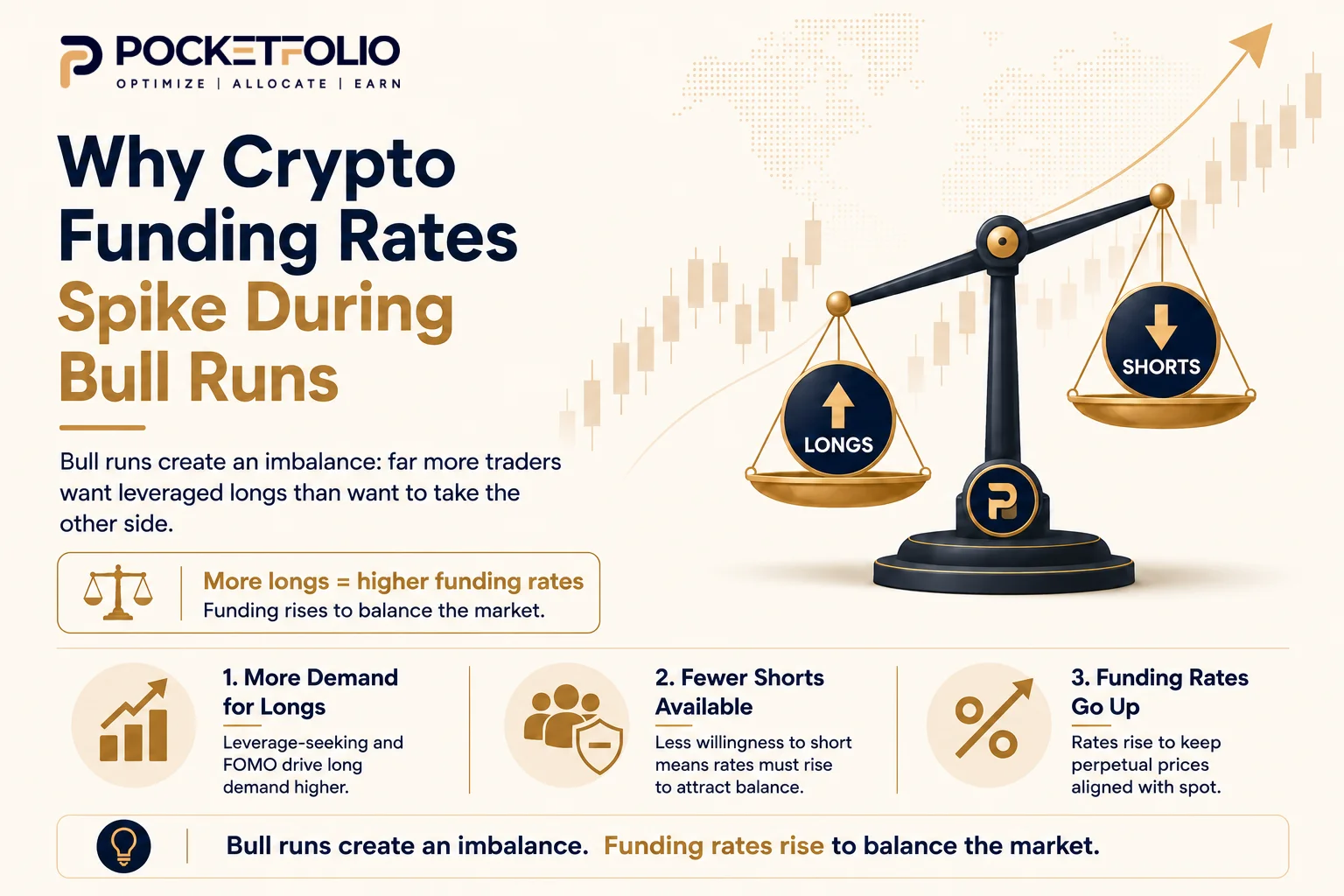
Watch funding rates during any real rally and you will notice a pattern. Why crypto funding rates spike during bull


New breakdowns on funding rates, arbitrage and market structure will arrive at your inbox.