Pocketfolio Team
June 1, 2026

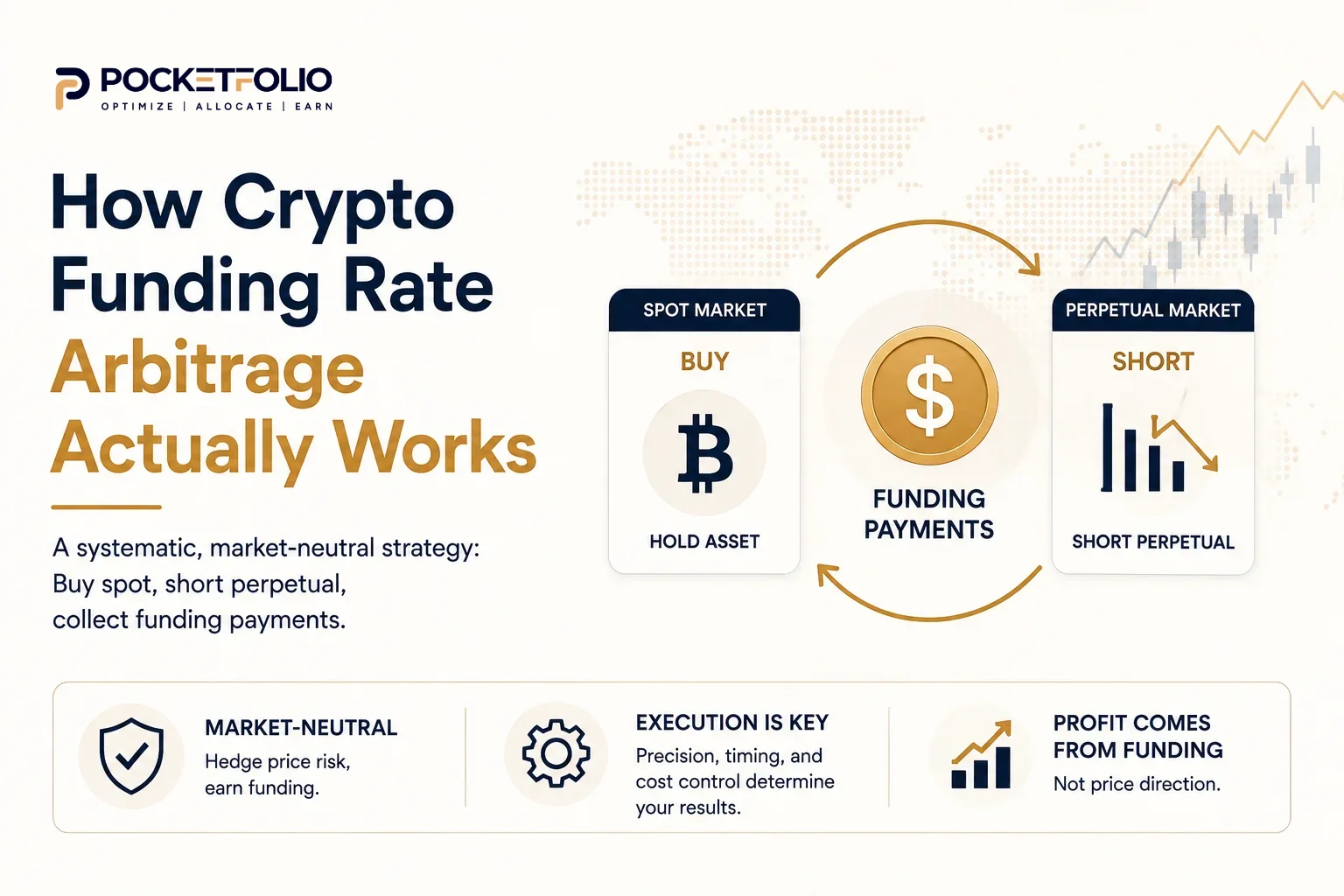
Most explainers stop at the concept: buy spot, short the perpetual, collect the payment. How crypto funding rate arbitrage actually works in practice involves several execution details that determine whether that concept turns into real profit or a quiet loss.
None of those details are complicated on their own. Skipping them is what separates a clean trade from one that bleeds fees and slippage before it ever collects a funding payment.
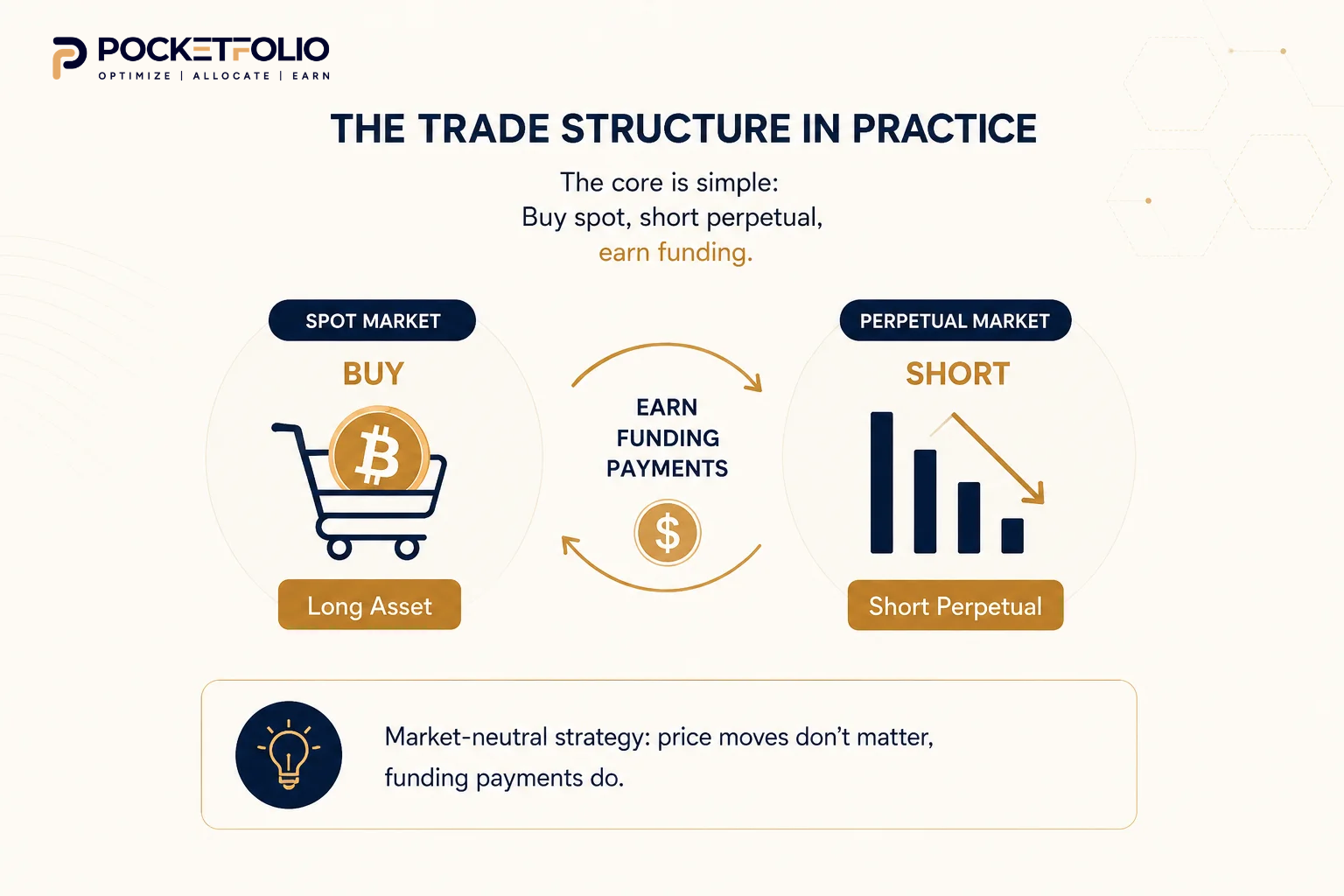
The core structure is simple. Buy the asset on the spot market, then open an equal notional short on the matching perpetual contract.
If you want the underlying formula behind the payment itself, our guide on how exchanges calculate funding rates covers that separately. This article focuses on what happens when you actually place the trade.
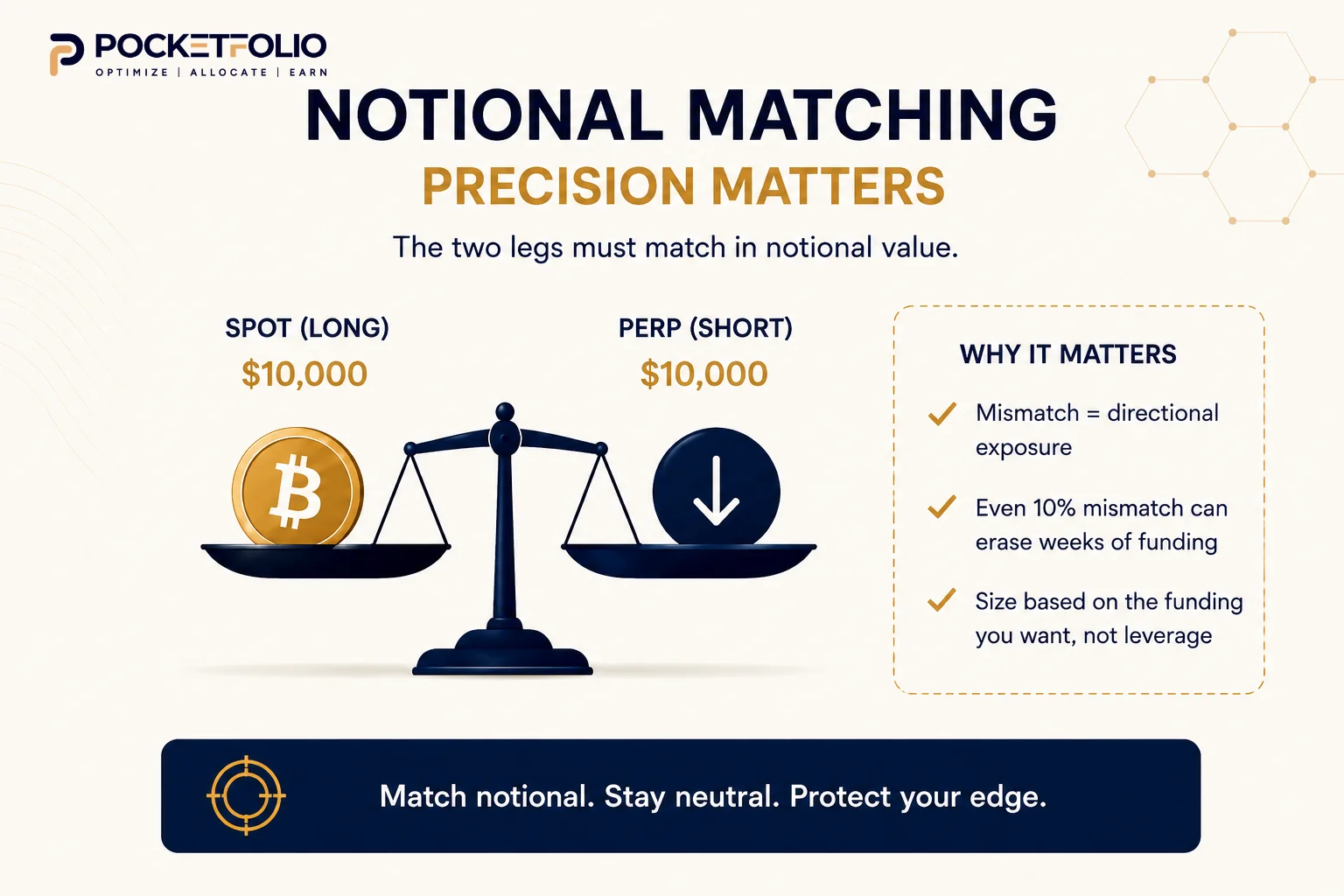
The two legs need to match in notional value, not just look roughly similar. A mismatch here is the single most common way a “neutral” position quietly stops being neutral.
A long leg that is 10% smaller than the short leg leaves you effectively 10% net short. One adverse price move at that size can erase weeks of accumulated funding income.
This matters more than it sounds. Rounding a position size for convenience, or sizing based on a stale price quote, is enough to introduce that gap.
A more disciplined approach works backward from the outcome. Notional size equals the funding income you want divided by the funding rate per period, which grounds the position in what you are actually trying to capture rather than an arbitrary leverage choice.
Leverage on the perpetual leg is typically modest in this strategy, often in the 2x to 5x range. The goal is a matched, hedged position, not amplified directional exposure, so higher leverage adds liquidation risk without adding to the actual funding capture.
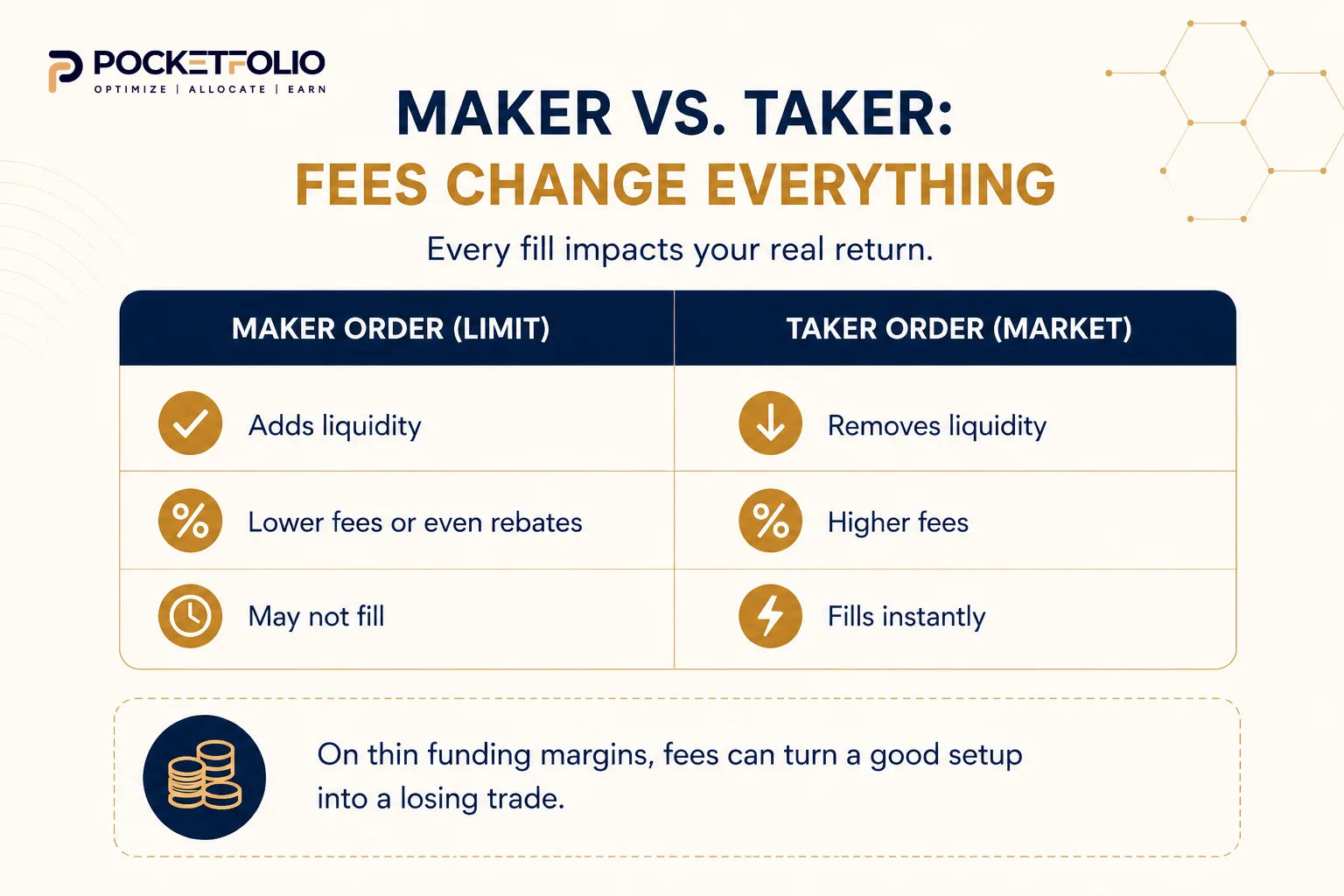
Every entry and exit uses either a maker order (limit, adds liquidity) or a taker order (market, removes liquidity), and the choice affects your real return before a single funding payment arrives.
Taker orders cross the spread immediately but cost more in fees. Maker orders avoid that cost and sometimes earn a rebate, at the cost of a fill that is not guaranteed.
On thin funding margins, that fee difference is not trivial. A trade that looks profitable on the headline rate can lose money once four taker fills are counted against it.
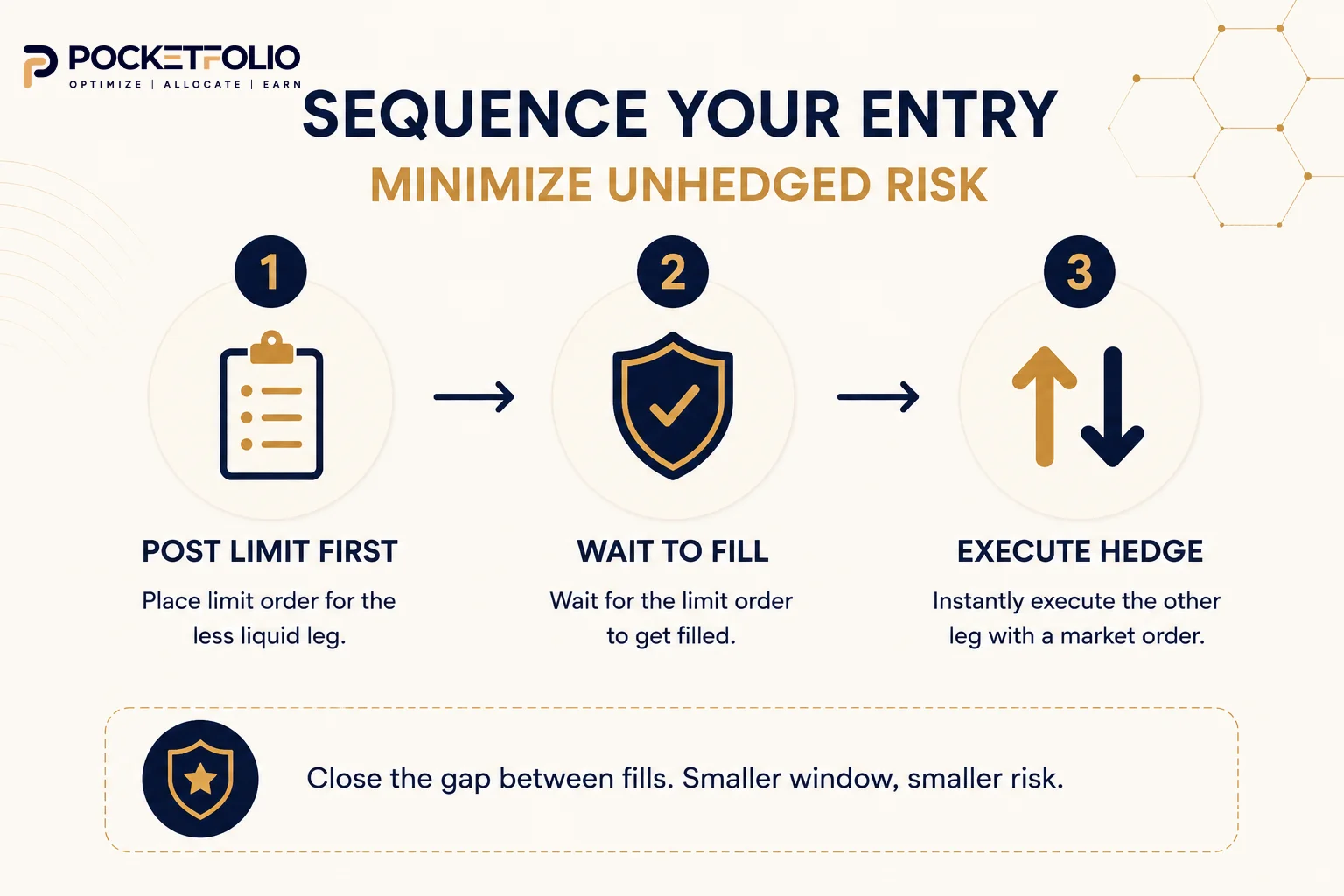
The two legs should be executed as close together as possible. If one leg fills and the other does not, you are temporarily holding unhedged price exposure, not a neutral position.
One practical approach: post the less urgent leg as a limit order on the venue with thinner liquidity first, then execute the hedge immediately on fill using a market order on the deeper order book, where slippage is smallest.
This does not eliminate the risk of a gap between fills, but it reduces the window where you are exposed.
Cross-margin uses your entire account balance as collateral, which gives more buffer against liquidation on the leveraged leg. Isolated margin limits collateral to funds allocated specifically to that position.
For a strategy you plan to hold for days or weeks, cross-margin’s larger buffer is generally the safer default. Isolated margin caps your downside on a single position but offers less room to absorb a sharp, temporary price move.
A high rate during a bull run looks attractive, and it can be a real opportunity. It can also be the exact spike-chasing trap covered in our guide on crypto funding rate arbitrage mistakes.
The rate you see in the middle of a euphoric run is a snapshot, not a guarantee. If euphoria fades and long demand cools, that same elevated rate can compress or reverse within a settlement period or two.
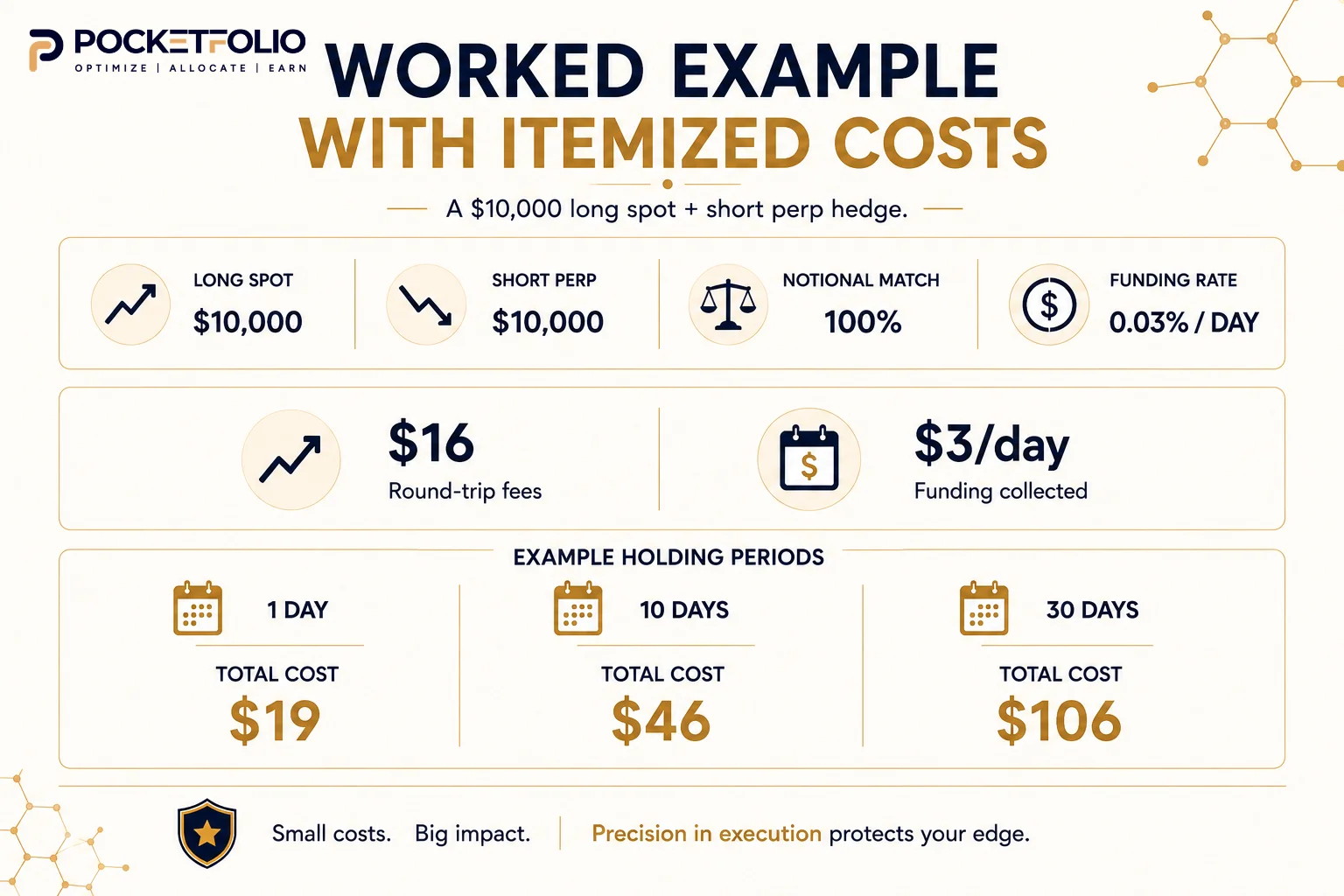

Numbers make the execution layer concrete. Say you are opening a $10,000 position.
Spot leg: buying $10,000 of BTC as a taker order at a 0.04% fee costs $4.
Perpetual leg: shorting $10,000 notional as a taker order at a similar 0.04% fee costs another $4.
Total entry cost: roughly $8 before any funding has been collected. Using maker orders on one or both legs instead would reduce this, at the cost of execution certainty.
Funding collection: at a 0.01% rate per 8-hour interval, three settlements a day, you collect roughly $3 per day, or about $9 over three days, before closing.
Exit costs: closing both legs at similar taker fees adds another $8, roughly.
Net result over three days: approximately $9 in funding collected against $16 in round-trip entry and exit fees, a net loss at this size and holding period. The same trade held for two to three weeks, with the same daily funding income, clears the fixed entry and exit costs and turns profitable.
This is the calculation that separates “the funding rate looks attractive” from “this trade actually clears its costs.”
Close both legs together, the same way you opened them: sell the spot, close the perpetual short, ideally within moments of each other.
Common exit triggers include the funding rate flipping negative, the rate compressing below your cost threshold, or simply reaching your target holding period. For a larger position, exiting in a few smaller steps rather than one large order can reduce slippage on both legs.
These are mechanical errors, distinct from the strategic mistakes covered in our guide on crypto funding rate arbitrage mistakes.
Notional mismatch: sizing the two legs even slightly differently, leaving unintended directional exposure.
Sequencing gaps: letting too much time pass between filling one leg and the other, during which price can move against the unhedged side.
Wrong margin type for the holding period: using isolated margin for a position meant to be held for weeks, leaving less buffer against a temporary adverse move.
Ignoring the fee round-trip: evaluating a trade on the headline funding rate alone without accounting for four separate fills worth of entry and exit costs.
Pocketfolio’s DIY Trading Scanner surfaces live rates and spreads across 50+ exchanges so you can evaluate whether a setup clears these costs before committing capital. If you would rather not manage entry, sequencing, and exit manually, Smart Yield Pool handles execution automatically.
Notional mismatch between the two legs is one of the most common, since even a small sizing difference leaves the position with unintended directional exposure instead of true market neutrality.
Maker orders reduce fee costs and sometimes earn a rebate, but are not guaranteed to fill. Taker orders fill immediately at a higher cost. The right choice depends on how much fee drag your expected funding income can absorb.
Yes. The two legs should be executed as close together as possible, since any gap between fills leaves you temporarily exposed to price direction rather than hedged.
Cross-margin generally offers a larger liquidation buffer, which suits a strategy typically held for days or weeks. Isolated margin caps downside on a single position but leaves less room to absorb a temporary adverse move.
Entry alone can cost roughly 0.08% of position size using taker orders on both legs, before counting exit costs, which is why small positions and short holding periods often fail to clear their own fees.
The most likely cause is fees and slippage exceeding the funding collected, particularly on small positions or short holding periods where fixed entry and exit costs make up a larger share of the total.
Close both the spot and perpetual legs together, as close in time as possible, and consider exiting large positions in smaller steps to reduce slippage on each leg.
A funding rate flipping negative, compressing below your cost threshold, or simply reaching your planned holding period are the most common triggers to close the position.
Yes. Tracking live rates and cross-exchange spreads helps you judge whether a setup will actually clear its round-trip costs before you commit capital, which is an execution decision as much as a discovery one.
Leverage in this strategy is typically modest, often in the 2x to 5x range, since the goal is a matched, hedged position rather than amplified directional exposure. Higher leverage adds liquidation risk without increasing the funding actually captured.
Share this article
Share this article
What Is an Arbitrage Bot? Types, Real Costs, How to Choose
Search the term and you get a wall of dashboards,
AI Arbitrage: How It Powers Crypto Funding Rate Arbitrage
AI arbitrage most often means something else entirely. Usually it
Why Crypto Funding Rates Spike During Bull Runs
Watch funding rates during any real rally and you will
You may be interested in these blogs

What Is an Arbitrage Bot? Types, Real Costs, How to Choose
Search the term and you get a wall of dashboards, all promising the same thing. Yet almost none of them

AI Arbitrage: How It Powers Crypto Funding Rate Arbitrage
AI arbitrage most often means something else entirely. Usually it means using AI tools to resell services at a markup,
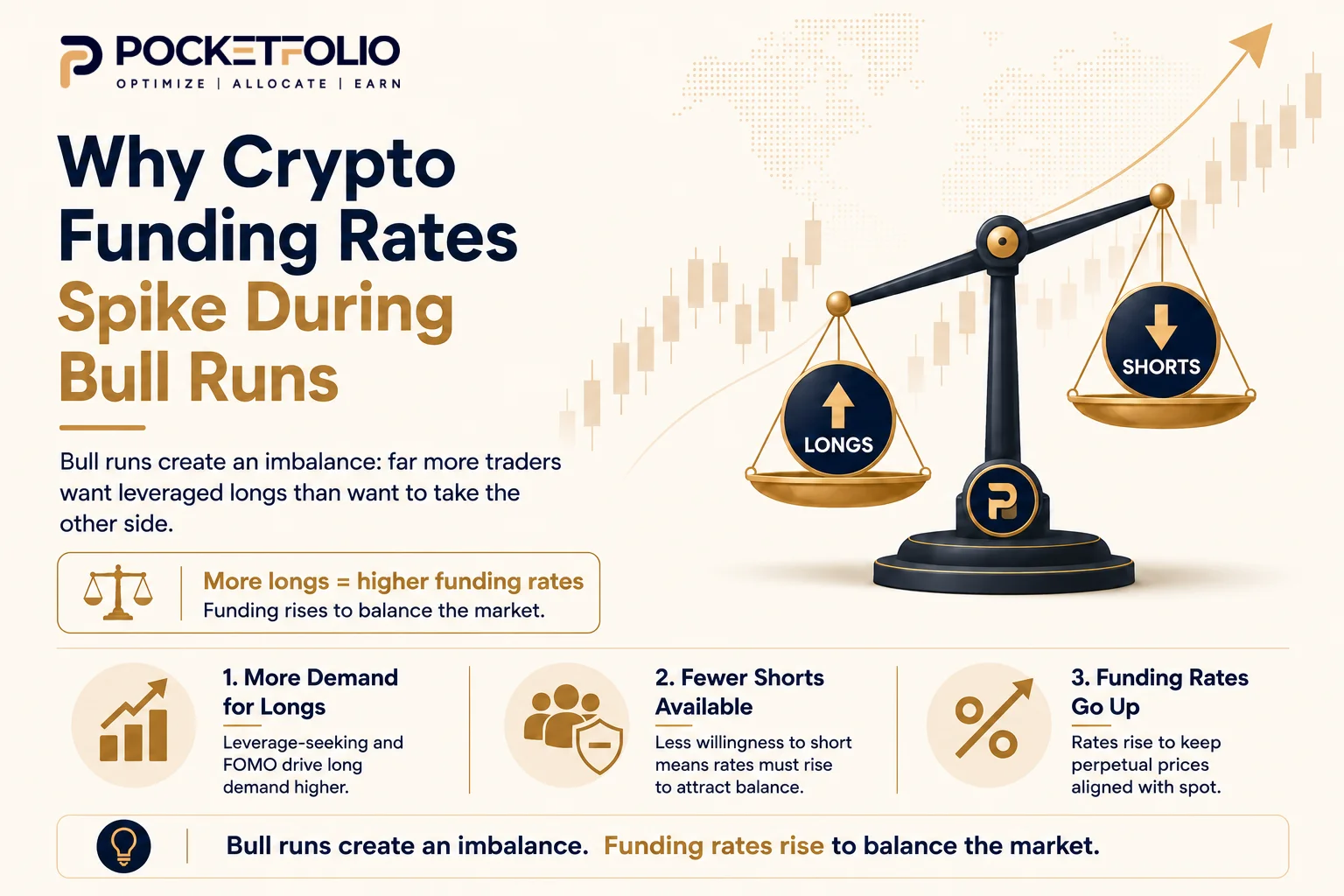
Why Crypto Funding Rates Spike During Bull Runs
Watch funding rates during any real rally and you will notice a pattern. Why crypto funding rates spike during bull
Ready to Explore the Platform?
Explore AI-powered tools for analyzing arbitrage opportunities.
No fees. No risk. Cancel anytime.

Ready to Explore the Platform?
Explore AI-powered tools for analyzing arbitrage opportunities.
No fees. No risk. Cancel anytime.

New breakdowns on funding rates, arbitrage and market structure will arrive at your inbox.